- PBMs earn revenue through administrative fees, spread pricing, and manufacturer rebate arrangements.
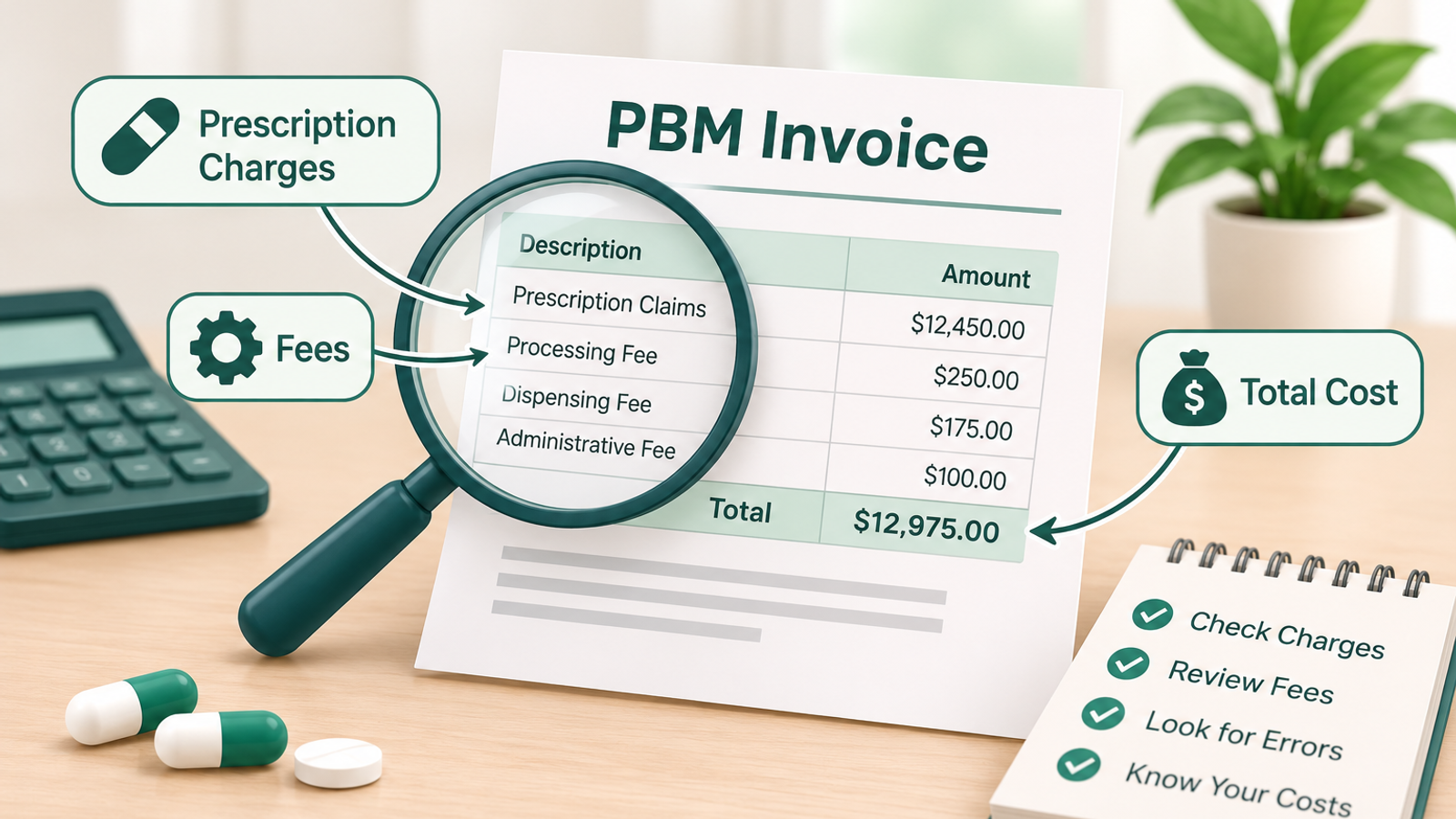
- Administrative fees cover services such as prescription claim processing and pharmacy network management.
- Spread pricing occurs when a PBM charges the health plan more than it pays the pharmacy.
- Rebate terms determine how manufacturer payments are calculated, distributed, and credited to the health plan.
When a company offers prescription drug benefits, it often works with a pharmacy benefit manager (PBM) to manage claims, pharmacy networks, and other parts of the benefit plan. But how does the PBM get paid for these services? The answer depends on the contract. Some PBMs charge administrative fees, while others may earn revenue through spread pricing or arrangements involving manufacturer rebates. These differences can affect how employers understand their prescription drug spending. Understanding PBM revenue models can help employers and benefits advisors look beyond the headline price and see how the full arrangement works.
What Are the Main PBM Revenue Models?
PBMs can earn revenue in different ways. The exact arrangement depends on the services they provide and the terms agreed upon with the health plan.
Common PBM revenue models include:
- Administrative fees: The health plan pays the PBM for services such as processing claims, managing pharmacy networks, and providing reports. The contract explains how these fees are calculated.
- Spread pricing: The PBM charges the health plan more for a prescription claim than it pays the pharmacy. The difference is known as the spread.
- Rebate-related revenue: Drug manufacturers may provide rebates under certain agreements. The contract determines how those payments are handled and whether they are passed back to the health plan.
- Additional service charges: Some contracts include separate charges for specific programs or services. Employers should check whether these costs are part of the base fee or billed separately.
These arrangements can work differently from one contract to another. A low administrative fee does not necessarily mean the entire plan costs less. Employers need to understand all the payments involved before comparing options.
How Do PBM Fees, Rebates, and Spread Pricing Work?
Understanding PBM fees
PBM fees are charged for the services provided to a health plan. They may be calculated per employee or member per month, per claim, or using another method set out in the contract. When reviewing PBM fees, employers should check which services are included, whether additional charges apply, and how the fee may change over time. These details help clarify what the plan is paying for.
How spread pricing works
Spread pricing creates a difference between what the PBM charges the health plan and what it pays the pharmacy. For example, suppose a PBM charges a health plan $100 for a prescription claim and pays the pharmacy $85. The $15 difference represents the spread in this hypothetical example. Employers may not see this difference in a summary report. They can ask whether their reporting provides both amounts so they can understand how the claim was priced.
How manufacturer rebates work
Drug manufacturers may offer rebates for eligible medicines under agreements with PBMs. The terms of these agreements determine how the payments are calculated and distributed. Under a rebate pass-through arrangement, rebates received for a health plan are credited or paid back to that plan according to the contract. Employers should check which payments are included, when reconciliation takes place, and how adjustments are handled. The amount estimated in advance may differ from the amount eventually received. Kanurra encourages employers to review clear reporting and contract terms when evaluating PBM revenue models and understanding how rebates are handled.
What Should Employers Review in a PBM Contract?
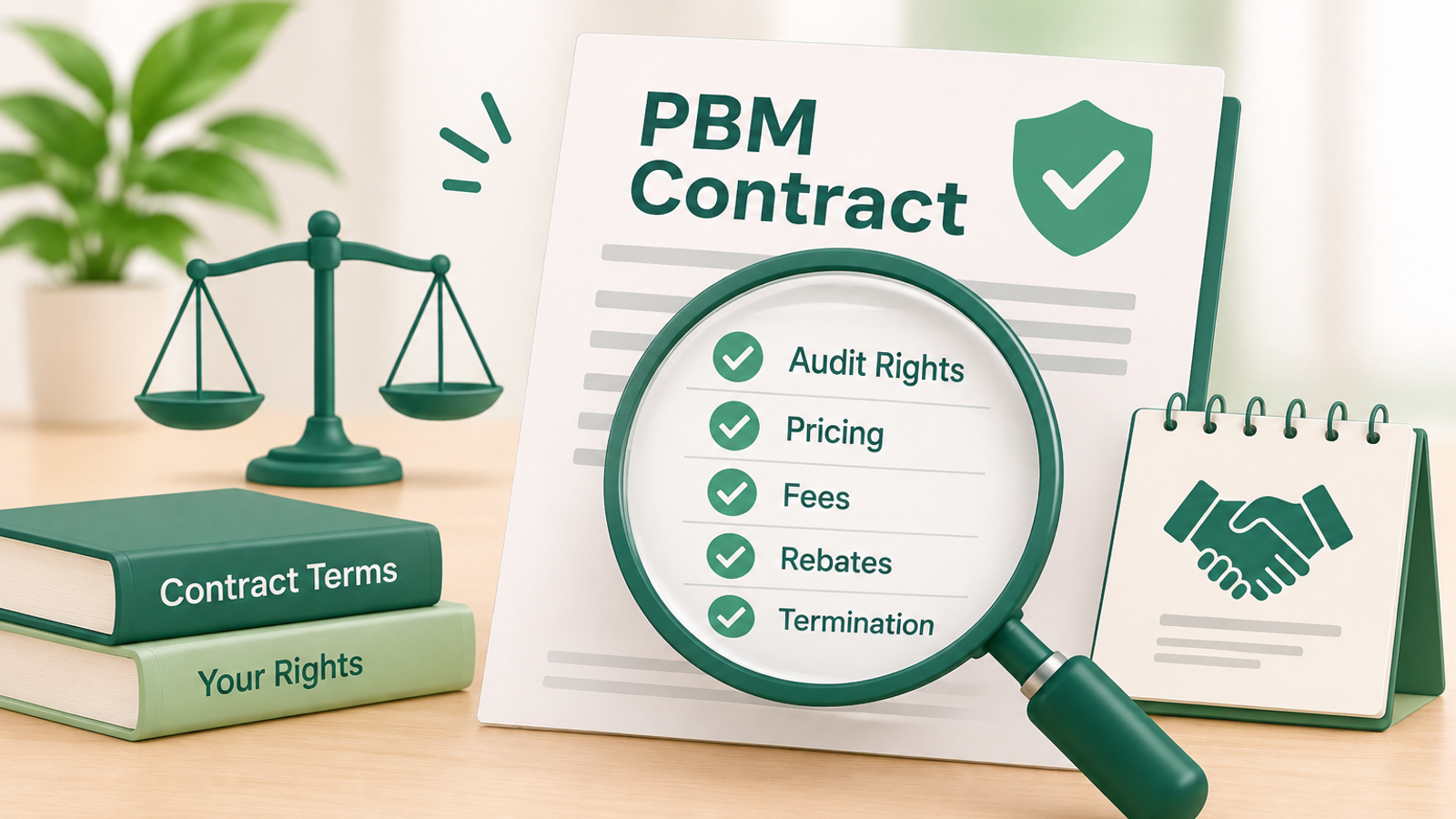
A PBM contract explains how the arrangement works and what the employer can verify. Before signing a new agreement or renewing an existing one, review the following areas.
Fees and included services
Check the contract for:
- Services covered by the administrative fee.
- Separate charges for reporting, clinical programs, or implementation.
- Rules for fee changes during the contract term.
Pharmacy payments and rebates
Look at how the contract defines pharmacy reimbursement and manufacturer rebates. Ask whether the plan can compare claim charges with pharmacy payments and see how rebate credits are calculated. The contract should also explain when rebate reports are provided and how differences between estimated and final amounts are reconciled.
Audit rights and reporting
Employers should understand what records they can access and whether they can appoint an auditor to review relevant information.
Pay attention to:
- Access to claim-level records and pharmacy payment details.
- Rebate reports and reconciliation statements.
- Audit deadlines, notice requirements, and restrictions.
- Data needed to verify contractual guarantees.
Kanurra's PBM Audit Checklist provides a starting point for organizing these questions.
How Can Employers Compare PBM Revenue Models?
Comparing PBM revenue models takes more than looking at one fee or rebate estimate. Employers need to review the contract alongside the financial records that show how the plan is being charged.
Start with the available records
Gather the current contract, fee schedule, prescription claims data, pharmacy reimbursement details, and rebate reports. Check that the records cover the same period and plan population.
If a report leaves out important details, ask the PBM to explain what is included and how the figures were calculated.
Compare the full cost structure
Review PBM fees alongside pharmacy payments, rebate credits, and any additional charges. Consider whether the reports make these amounts easy to understand and whether the contract allows the plan to verify them.
Also check the renewal date and termination terms. These details are important if the employer is considering a different arrangement.
Understand Kanurra's approach
Kanurra describes its model as using transparent claim-level pricing, a flat administrative fee disclosed in the contract, and manufacturer rebates credited back to the plan under its stated approach. Employers should review the applicable contract and reports to understand how these terms apply to their own plan.
A useful next step is to request a claims audit. Reviewing available claims information can help employers identify questions about pricing, pharmacy payments, and rebate reporting.
Ultimately, a PBM arrangement should be evaluated using its actual contract terms and supporting records. Understanding the fees, rebates involved gives employers a clearer basis for reviewing their prescription drug benefits.
Conclusion
Knowing how PBMs make money can help employers make better choices about their prescription drug plans. Looking at PBM fees, rebate terms, and audit rights helps them see where the money goes and what they are paying for. Want to know more about your current prescription drug costs? Contact Kanurra to discuss a claims audit and find out which costs or details may need a closer look.
Frequently asked questions
What are the main PBM revenue models?
Common PBM revenue models include administrative fees, spread pricing, and arrangements involving manufacturer rebates. The details depend on the contract.
How do PBM fees work?
PBM fees cover services such as claims processing and pharmacy network administration. Contracts define how fees are calculated and which services are included.
What is spread pricing in pharmacy benefits?
Spread pricing occurs when a PBM charges a health plan more for a prescription claim than it pays the pharmacy, retaining the difference.
Do employers receive all PBM rebates?
It depends on the contract. Under a pass-through arrangement, rebates received for the plan are credited or paid back according to the agreed terms.
How can employers review their PBM costs?
Employers can review their contracts, claims data, pharmacy reimbursement records, rebate reports, and audit rights to understand the full cost structure.
Written by
Kanurra