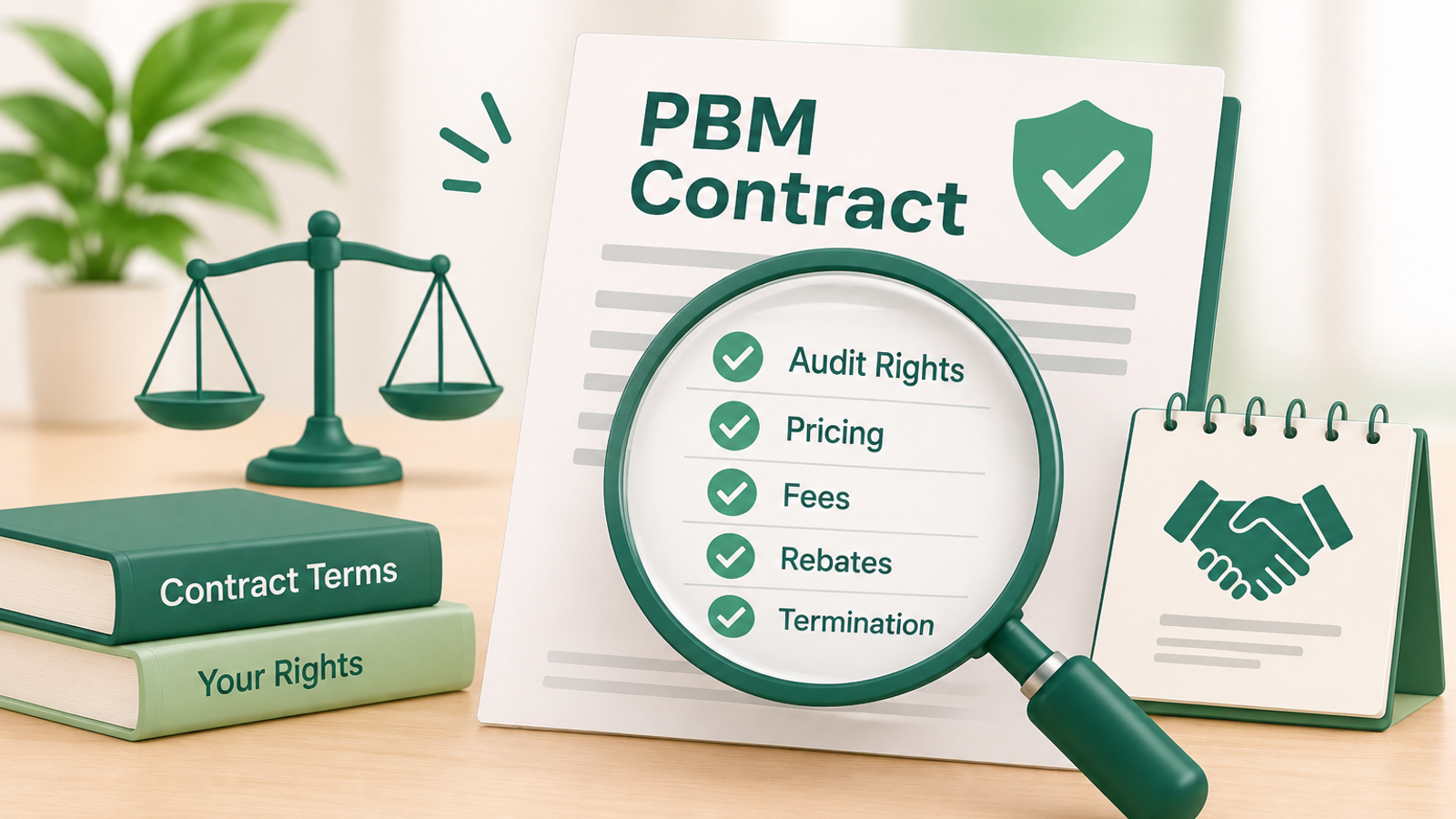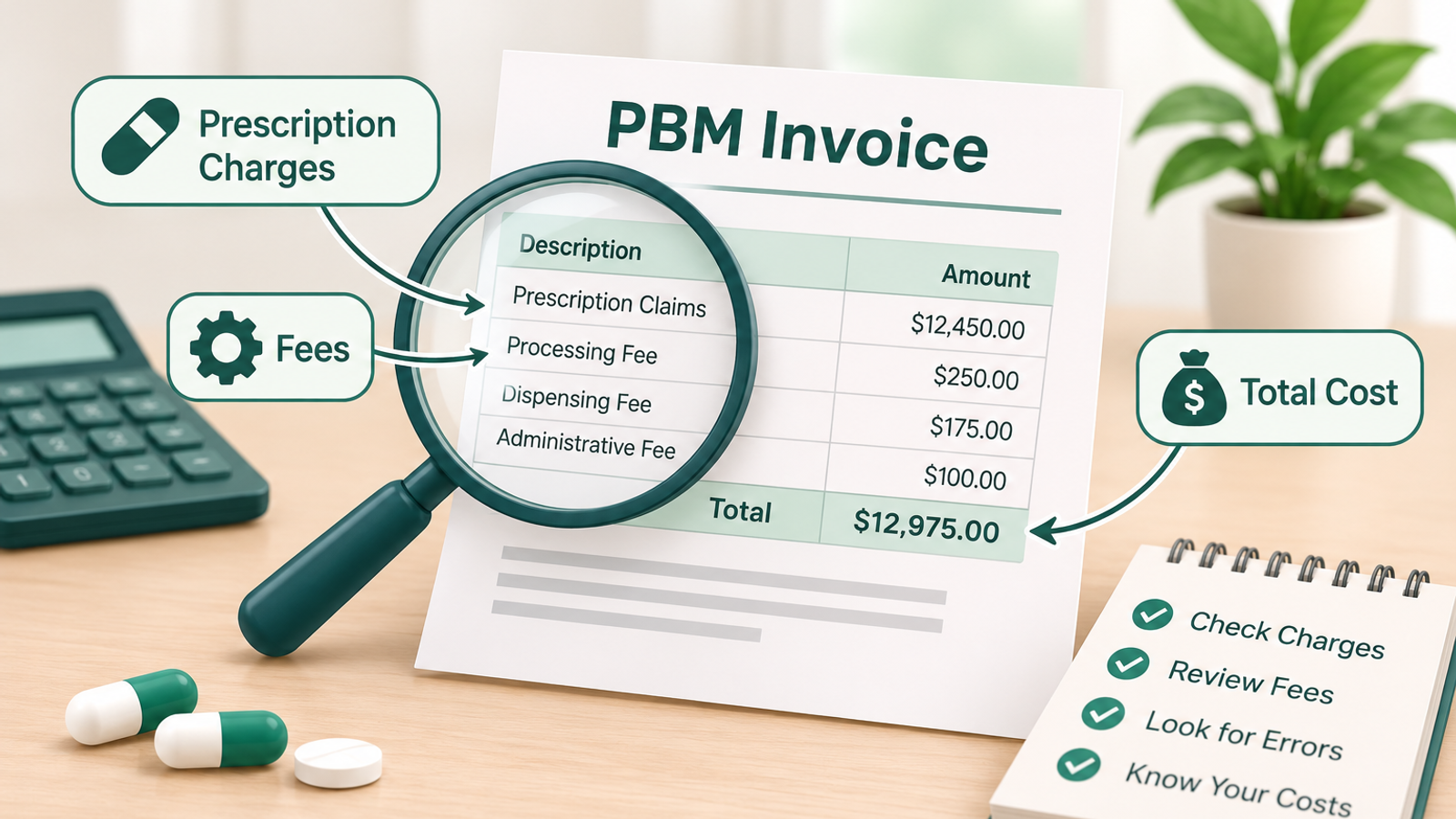
- PBM invoices may include prescription claims, administrative fees, adjustments, and rebate credits.
- Employers should check billing periods, claim details, and total amounts due.
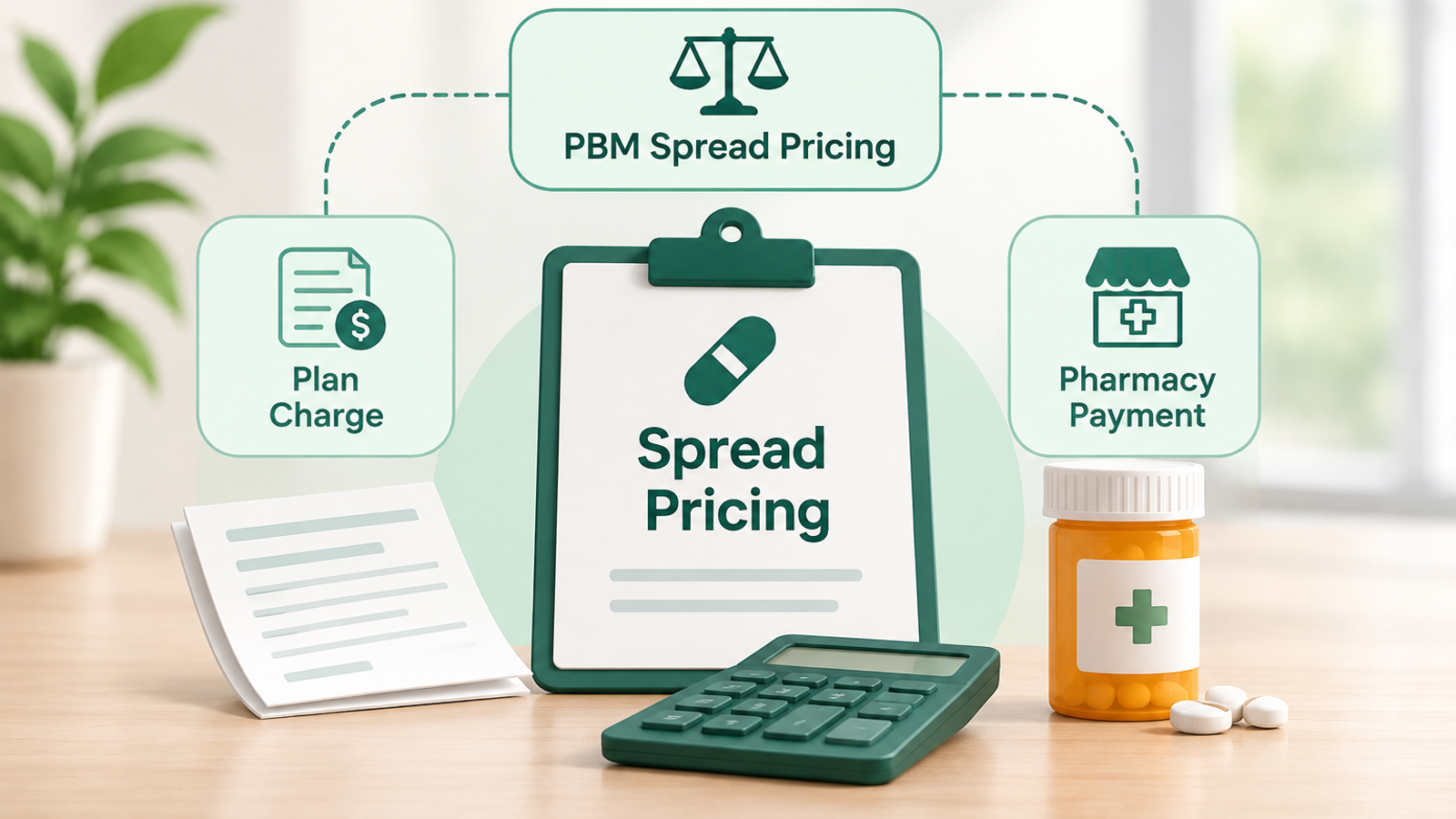
- Comparing plan charges with pharmacy payments helps clarify prescription costs.
- Administrative fees, additional charges, and rebate credits should match the contract terms.
A PBM invoice shows what an employer is charged for managing prescription benefits. It may include prescription claims, administrative fees, adjustments, and other costs. But understanding the total amount due is not always easy. Each charge has a purpose, and employers should know what they are paying for. A careful PBM invoice analysis helps employers review these charges and check whether they match the agreed terms. It also helps them understand prescription claims costs and how they affect the plan's overall expenses. This guide explains what to look for when reading a PBM invoice and how to review each section.
Understand the Main Sections of Your PBM Invoice
Start by looking at how the invoice is arranged. Most PBM invoices include a billing period, total amount, claim details, and fees. Some may also show credits and adjustments. The layout can differ between PBMs, but the main details should be clear. Before checking individual charges, make sure you understand the basic information on the invoice.
- Billing period: Check the start and end dates on the invoice. Make sure they match the billing schedule in your agreement. Also, check for missing or repeated billing periods.
- Total amount due: Look at the final amount and compare it with your previous invoice. If the amount has changed, check whether the difference comes from claims, fees, or adjustments.
- Claim activity summary: Check how many prescription claims were processed during the billing period. Compare this number with the detailed claim report to make sure both records match.
- Plan and group details: Confirm that the invoice shows the correct employer group, plan, and billing account. This helps prevent confusion when reviewing charges.
- Supporting reports: Check whether the PBM provides detailed claim records, fee breakdowns, and adjustment reports. These records help explain the charges listed on the invoice.
Understand the Costs Behind Prescription Claims
Prescription claims are a major part of pharmacy benefit billing. Each claim represents a transaction involving a medication, a pharmacy, and the health plan. The invoice may show different amounts related to the same prescription. Understanding these amounts helps employers see how prescription claims costs are calculated. During PBM invoice analysis, pay attention to the following details.
Amount Charged to the Plan
- Total amount billed for the prescription
- Pricing method used for the claim
- Amount recorded in the claim report
Pharmacy Reimbursement
- Amount paid to the dispensing pharmacy
- Pharmacy reimbursement terms
- Difference between the pharmacy payment and plan charge
Member Payments
- Copayments
- Coinsurance
- Deductible amounts
- Member payments recorded for each claim
Drug and Claim Details
- Medication name and identifier
- Quantity dispensed
- Pharmacy and dispensing date
- Claim status, including reversals
Changes in Claim Activity
- Monthly claim volume
- Changes in total claim charges
- New or discontinued medications
- Differences between current and previous billing periods
Check Administrative Fees, Adjustments, and Rebates
A PBM invoice may include charges beyond prescription claims. These can include administrative fees, service charges, and other items listed in the contract. Employers should check what each fee covers and how it is calculated. They should also review how rebate credits and adjustments appear on the invoice. These items help explain the full picture of prescription claims costs and the plan's total expenses.
- Administrative fees: Check the fees charged for PBM services. These may be fixed fees, per member per month (PEPM) fees, or charges based on another method in the contract.
- Additional service charges: Look for any separate charges for services covered by your agreement. Check what each charge is for and whether it matches the agreed terms.
- Rebate credits: Review how manufacturer rebates are reported and credited to the plan. Rebate terms can differ between PBM contracts. Check what rebates are received, how they are passed through, and when the credits appear. Read Kanurra's guide to PBM rebates for more information.
- Adjustments and reversals: Check for credits, corrected claims, and changes to earlier invoices. Each adjustment should have a clear reason and should be included correctly in the final amount.
- Net plan expense: Review the total charges after applicable credits and adjustments. This helps you understand the amount the plan is responsible for under the contract.
Reconcile the Invoice and Identify Questions
After reviewing the charges and fees, compare the invoice with your PBM contract and claim reports. This helps you find unclear charges, missing details, or amounts that need further explanation. A proper PBM invoice analysis should check whether the billed amounts match the contract and supporting records. If something is unclear, ask the PBM for more details before approving the invoice.
- Compare with contract terms: Check the fees, pricing methods, and rebate terms against your signed agreement. Ask the PBM to explain any charge that does not match the contract.
- Match totals with claim reports: Compare the invoice summary with the detailed claim records. Check that claim counts, charges, reversals, and adjustments are included correctly.
- Review unusual changes: Look for large changes in monthly charges or fees. Ask the PBM what caused the difference and request supporting details.
- Request missing information: If a charge is not clear, ask for the related claim details, calculation, or contract reference. Keep a record of the response for future reviews.
- Keep records: Save invoices, claim reports, contracts, and review notes. These records can help with future billing checks and audits. The PBM audit checklist can also help organize this process.
Make PBM Invoice Reviews Part of Your Process
Reviewing a PBM invoice helps employers understand where their pharmacy benefit costs come from. Checking prescription claims, administrative fees, adjustments, and rebate credits gives a clearer view of how the plan is billed.
Regular PBM invoice analysis makes it easier to spot unclear charges and compare billing details with contract terms. Understanding prescription claims costs also requires access to claim records and clear fee information. Kanurra focuses on PBM pricing, claim-level visibility, and clearly defined administrative fees. Employers who want to understand different PBM pricing models can visit Kanurra's PBM pricing page for more information.
Conclusion
A PBM invoice gives employers a closer look at how their pharmacy benefit plan is billed. Reviewing claim charges, administrative fees, rebate credits, and adjustments can help identify questions before they become ongoing billing concerns. Regular PBM invoice analysis also helps employers check whether billing follows the terms of their agreement. Kanurra supports transparent PBM pricing with claim-level visibility and clearly defined administrative fees. Want a clearer view of your PBM costs? to review your current pricing and billing details.
Frequently asked questions
What is a PBM invoice?
A PBM invoice is a billing statement that shows prescription claim charges, administrative fees, adjustments, and other costs related to a pharmacy benefit plan.
What should employers check on a PBM invoice?
Employers should review claim charges, pharmacy reimbursements, administrative fees, rebate credits, and adjustments against their PBM contract.
How can employers review prescription claims costs?
Compare claim-level records with invoice totals and check the amounts charged to the plan, pharmacy payments, and member contributions.
How are rebates shown on a PBM invoice?
Rebates may appear as separate credits or in rebate reports. Employers should check their contract to understand how rebates are reported and passed through.
How often should employers review PBM invoices?
Employers should review invoices with each billing cycle and compare them with claim reports and contract terms to identify unclear charges.
Written by
Kanurra